

Free Exercise’s False Binary: Lessons from Jewish Law at the UC Berkeley Center for Jewish Studies
Wednesday, September 2 at 4:00 pm through 5:30 pm
Free
Organizer: UC Berkeley Center for Jewish Studies
Date and Time: Wednesday, Sep. 2nd @ 4:00-5:30pm
Location: 3335 Dwinelle Hall, UC Berkeley campus
This lecture puts Jewish law in conversation with the ongoing debate over how the Free Exercise Clause of the First Amendment should be construed. A bedrock assumption in free exercise jurisprudence is that religion’s mandates are absolute. But religious norms do not always operate that way. Jewish law, for example, is often nonbinary and spectrum-based. It is an elaborate system of flexible standards and sliding-scale rules that enables religious practitioners to live under secular rule. Jewish law, then, allows us to reexamine a common assumption underlying free exercise jurisprudence. It also raises the question whether, in some instances at least, religious freedom itself incentivizes the reshaping of religion as unyielding where previously it was understood to be flexible.
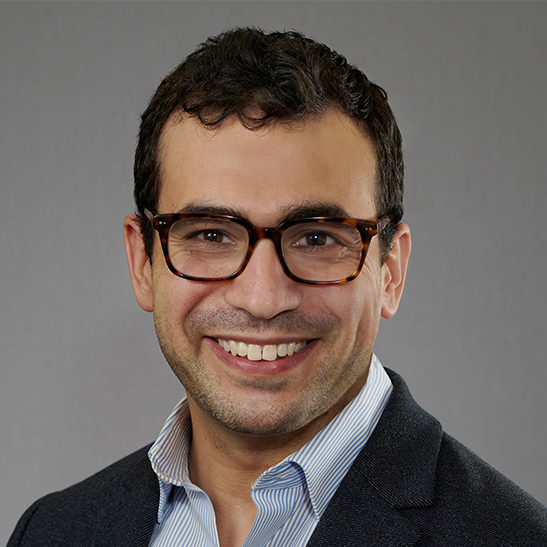
Zalman Rothschild is an Assistant Professor of Law and the Horn Family Distinguished Research Scholar in Law and Religion at the Benjamin N. Cardozo School of Law. He holds a J.D., magna cum laude, from Harvard Law School and a Ph.D. from New York University. His scholarship has appeared in the Columbia Law Review, Cornell Law Review, Georgetown Law Journal, Harvard Law Review Forum, and Yale Law Journal Forum, and has been featured in The New York Times, The New Yorker, and The New York Review of Books. His popular writing has appeared in The New York Times, The Atlantic, The Guardian, and The Washington Post. He has testified before Congress on religion and public schools and has delivered, or is scheduled to deliver, several named lectures, including the Fishman Family Endowed Lecture at Vassar College, the Krivosha Lecture at the University of Nebraska, and the Robert M. Cover Lecture in Law and Religion at Yale Law School. The Law and Religion Section of the Association of American Law Schools has twice awarded him the Harold Berman Award for Excellence in Scholarship.
This event is co-sponsored by the Helen Diller Institute for Jewish Law and Israel Studies.